
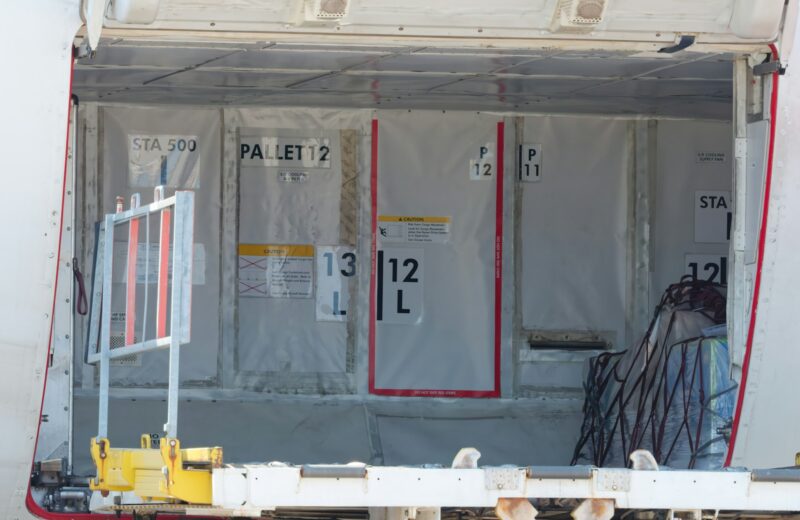
Actual, volumetric and chargeable weight in air freight
How air freight chargeable weight works: actual weight, volumetric weight with the IATA 6,000 divisor, and a worked Miami to Bogotá example.

Read a freight quote in sections: what you pay at origin, the main freight, what you pay at destination, and what is left out. Before looking at the total, check that it covers the same legs as the quote you are comparing it with, and which charges are fixed and which can change. Two quotes with different totals rarely include the same things.
Most quotes follow the path the cargo takes:
If a quote is missing any of these sections, ask whether it is included or whether you will pay for it separately.
| Line | What it is | How it's charged | What to check |
|---|---|---|---|
| Pickup | Trucking from your supplier to the warehouse or port | Per trip | Exact address, whether waiting time or a liftgate is included |
| Warehouse handling / CFS | Receiving, measuring and consolidating the cargo | Per m³, per pallet or flat | Whether it only applies to LCL |
| Export filing (EEI) | Electronic Export Information filed for U.S. exports | Flat per shipment | Whether your shipment requires it |
| Origin THC | Handling the container at the loading terminal | Per container | Whether it's separate or built into the freight |
| Ocean or air freight | The international leg | Per container, per W/M or per chargeable kg | Routing, transshipments and estimated transit time |
| BAF or fuel surcharge | Adjustment for fuel prices | Per container, per W/M or per kg | Whether it's fixed or "subject to change" at shipment |
| Security surcharge (air) | Screening and security controls for air cargo | Per chargeable kg | Whether it's built into the per-kilo rate |
| BL or air waybill fee | The transport document | Flat | Whether amendments cost extra |
| Destination THC and port charges | Handling at the arrival terminal | Per container or per W/M | Whether the forwarder or a destination agent bills them |
| Devanning | Unloading the container and separating your cargo | Per W/M | LCL only |
| Destination customs clearance | Customs broker fees | Flat or value-based | Whether permits or inspections are included |
| Duties and taxes | Import duties and taxes | Percentage of customs value | Almost always outside the total; billed at cost |
| Final delivery | Trucking from the port to your warehouse | Per trip | Delivery hours, unloading and truck access |
| Cargo insurance | Cover against loss or damage | Percentage of insured value | Coverage, deductible and insured value |
How to read a quote
Freight quote
No prices here: every shipment is quoted on its own route, cargo and dates. Open each line to see what it covers and what to ask.
The cost of moving the cargo from the origin port or airport to the destination one, quoted per container, per cubic meter or per chargeable kilo depending on the mode.
What to ask: Which unit is it quoted in, and until what date is the rate valid?
A surcharge the shipping line or airline adds to the freight and adjusts when fuel prices change.
What to ask: Is it already included in the freight or charged on top, and can it change before the cargo ships?
What the port or airport terminal charges to handle the cargo before it is loaded.
What to ask: Are they included, and who pays them under the agreed Incoterm?
What the destination terminal charges to unload and handle the cargo when it arrives.
What to ask: Are they part of this quote, or will they be billed separately on arrival?
Issuing the bill of lading or air waybill and the other papers the shipment needs.
What to ask: Which documents does it cover, and do corrections or extra copies cost more?
The customs broker’s fee for filing the export or import entry; duties and taxes are separate.
What to ask: Does it cover export, import or both, and are duties estimated or left out?
The truck that collects the cargo at the supplier or takes it to its final address.
What to ask: Which exact addresses does it cover, and are waiting time or loading help extra?
Cover against loss or damage in transit, beyond the carrier’s limited liability.
What to ask: What value is it based on, what does it exclude and what is the deductible?
Charges that start when the cargo or the container stays longer than the free time allowed.
What to ask: How many free days do you get, and what happens if customs holds the cargo?
Line names change from one provider to another. What matters is that every charge comes itemized.
The terms at the bottom of the quote often decide what you end up paying. Check:
Say an industrial plant in Cartagena, Colombia, gets two quotes for a 40-foot container of machinery spare parts, from a warehouse in Doral to the plant. Duties and taxes are excluded from both.
Quote A, door to door
Quote B, to the port of Cartagena
At first glance, B is USD 1,450 cheaper. To compare them, fill in what the plant will pay in Cartagena under B. Assume B's destination agent charges:
That adds USD 1,600 at destination, bringing B to USD 4,725: USD 150 more than A. On top of that, B's BAF may rise before the cargo ships, and the destination charges only become known once the cargo arrives.
Because of changes in actual weight or dimensions, surcharges that were subject to change, demurrage days, storage or inspections. A clear quote tells you in advance which of those lines can move.
Because they depend on each product's tariff classification and customs value, which the customs broker determines with the commercial invoice in hand. You can ask for an estimate before the cargo ships.
These are payments the forwarder makes on your behalf to another party, such as duties or port charges, and bills to you at cost. Ask for the receipts along with the invoice.
As long as the quote itself states. Freight rates change often, so ask until what date it holds and which charges can change before the cargo ships.
If you have a freight quote in hand and want to go through it line by line, send it over and we'll tell you what it covers and what's missing.
How air freight chargeable weight works: actual weight, volumetric weight with the IATA 6,000 divisor, and a worked Miami to Bogotá example.
When a full container (FCL) beats consolidated cargo (LCL), how much fits in a 20' and a 40', and how to work out the break-even point for your lane.

The 11 Incoterms 2020 rules explained for buyers: who pays each leg, where risk transfers and how to compare quotes made on different Incoterms.
Tell us about your shipments and our logistics experts will get in touch as soon as possible.