

How to read a freight quote, line by line
What each line on a freight quote means (THC, BAF, EEI, BL, clearance), what to check in the fine print and how to compare two quotes fairly.
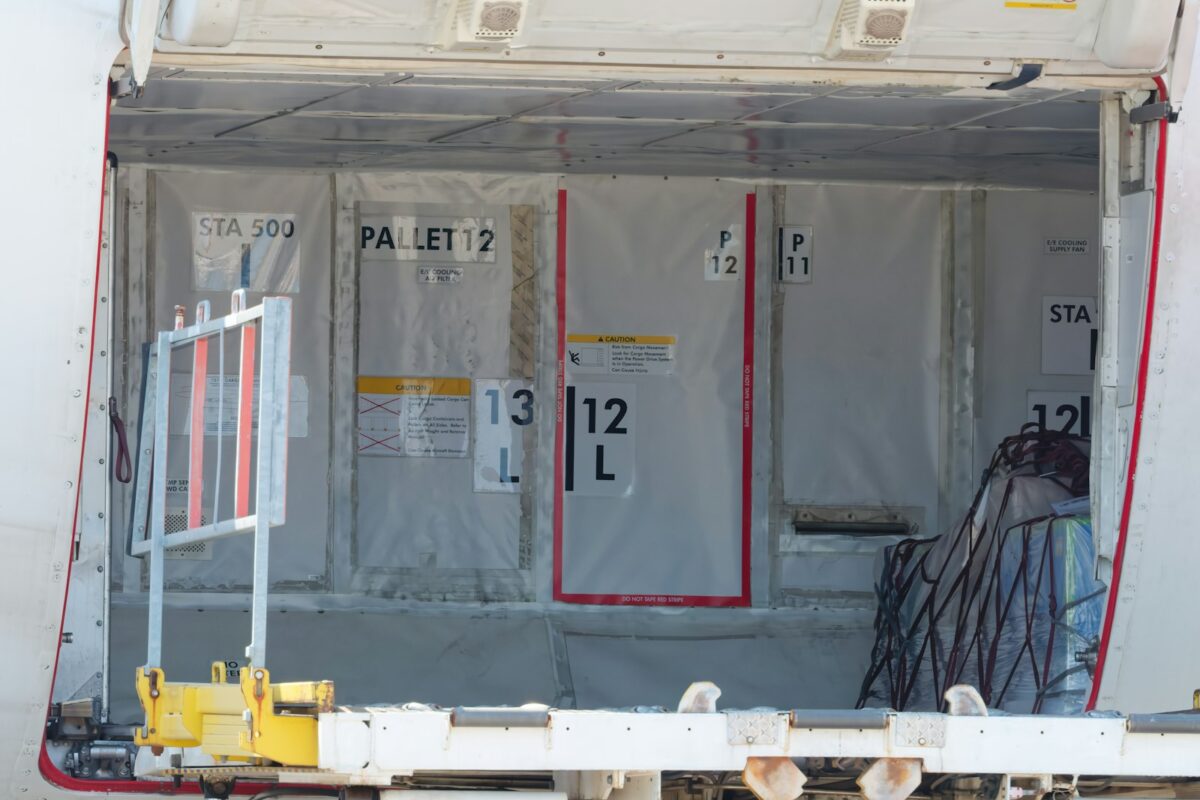
In air freight, the per-kilo rate applies to the chargeable weight, which is the greater of the actual weight and the volumetric weight. Volumetric weight is length × width × height in centimeters divided by 6,000, the ratio set by IATA. If your cargo is light and bulky, you pay for the space it takes up on the aircraft.
Actual weight (gross weight) is what the scale reads: goods, packaging and pallet included.
Volumetric weight (also called dimensional or "dim" weight) is a notional weight that reflects how much space the cargo takes. It exists because an aircraft can fill up two ways, by weight or by volume. A pallet of pillows weighs little but takes the same hold space as a pallet of spare parts. Volumetric weight puts both on the same scale so the airline charges for the resource each one actually uses.
The standard IATA formula for air cargo is:
Volumetric weight (kg) = length × width × height (in cm) ÷ 6,000
If you measure in meters, the equivalent ratio is 1 m³ = 167 kg (166.67 to be exact). If you measure in inches, divide the cubic inches by 366 to get kilos, or by 166 to get pounds.
A few practical rules:
A handy shortcut is density. If your cargo weighs more than 167 kg per cubic meter (about 10.4 lb per cubic foot), actual weight governs. If it weighs less, volumetric weight governs.
| Term | How it's obtained | What it tells you |
|---|---|---|
| Actual (gross) weight | Scale reading, with packaging and pallet | How heavy the cargo is |
| Volumetric weight | Length × width × height in cm ÷ 6,000, per piece | How much space it takes, expressed in kilos |
| Chargeable weight | The greater of the two, rounded up to the next half kilo | The figure the per-kilo rate is applied to |
| Density threshold | 167 kg per m³ | Above it, actual weight governs; below it, volumetric weight does |
Calculator
Air freight chargeable weight
Airlines charge for whichever is higher: the actual weight or the volumetric weight.
Turn on JavaScript to see the result as you type.
Volumetric weight per piece = length × width × height in cm ÷ 6,000, which equals 167 kg per cubic meter. That is the IATA divisor, the industry standard for air cargo. Some services use a different divisor and airlines usually round up to the next half kilo, so your quote confirms the final figure.
Fuel and security surcharges are charged per kilo, and depending on the airline they apply to chargeable weight or to actual weight. Check the quote to see which: if it's chargeable weight, a measuring error raises both the base rate and the surcharges.
Say an events production company in Bogotá is receiving four crates of audio equipment from Miami. Each crate measures 120 × 80 × 100 cm (about 47 × 31.5 × 39 in) and weighs 95 kg (about 209 lb).
Step 1. Total actual weight: 4 × 95 = 380 kg.
Step 2. Volumetric weight per crate: 120 × 80 × 100 = 960,000 cm³; 960,000 ÷ 6,000 = 160 kg. For all four crates: 640 kg.
Step 3. Chargeable weight: the greater of 380 and 640, which is 640 kg. The cargo's density is about 99 kg per m³ (380 kg in 3.84 m³), well below 167, so volume governs.
Air rates are published in weight breaks: the more kilos, the lower the price per kilo. Assume these all-in rates (freight plus surcharges) for the lane:
Cost with the original packaging: 640 kg × USD 3.40 = USD 2,176.
Now assume the production company asks the supplier for tighter packaging, and each crate comes down to 120 × 80 × 75 cm with the same weight:
Here is a rule few buyers know about: if billing the shipment at the minimum weight of the next break works out cheaper, that calculation applies. 500 kg × USD 3.40 = USD 1,700, which is less than USD 1,728. The shipment pays USD 1,700.
The result: cutting 25 cm off the height of each crate brought the bill from USD 2,176 down to USD 1,700, a saving of USD 476, or about 22%, for the same goods going to the same place.
Because the warehouse or the airline weighed and measured the cargo again on receipt, and the invoice uses those figures. If the dimensions change, the chargeable weight changes with them.
Yes, at a different ratio. Ocean LCL is billed per metric ton or cubic meter, whichever is greater, which means 1 m³ counts as 1,000 kg.
No. Weight and dimensions are checked at the warehouse and the airport, and an incorrect declaration can lead to extra charges, delays or trouble with customs.
Yes. The pallet is part of the piece, so it adds to both height and actual weight. A standard wooden pallet adds roughly 15 cm (about 6 in) of height.
If you'd like to know what your next air shipment will be billed on, send us the dimensions and weight of each piece and we'll come back with the chargeable weight worked out.
What each line on a freight quote means (THC, BAF, EEI, BL, clearance), what to check in the fine print and how to compare two quotes fairly.
When a full container (FCL) beats consolidated cargo (LCL), how much fits in a 20' and a 40', and how to work out the break-even point for your lane.

The 11 Incoterms 2020 rules explained for buyers: who pays each leg, where risk transfers and how to compare quotes made on different Incoterms.
Tell us about your shipments and our logistics experts will get in touch as soon as possible.