

How to read a freight quote, line by line
What each line on a freight quote means (THC, BAF, EEI, BL, clearance), what to check in the fine print and how to compare two quotes fairly.
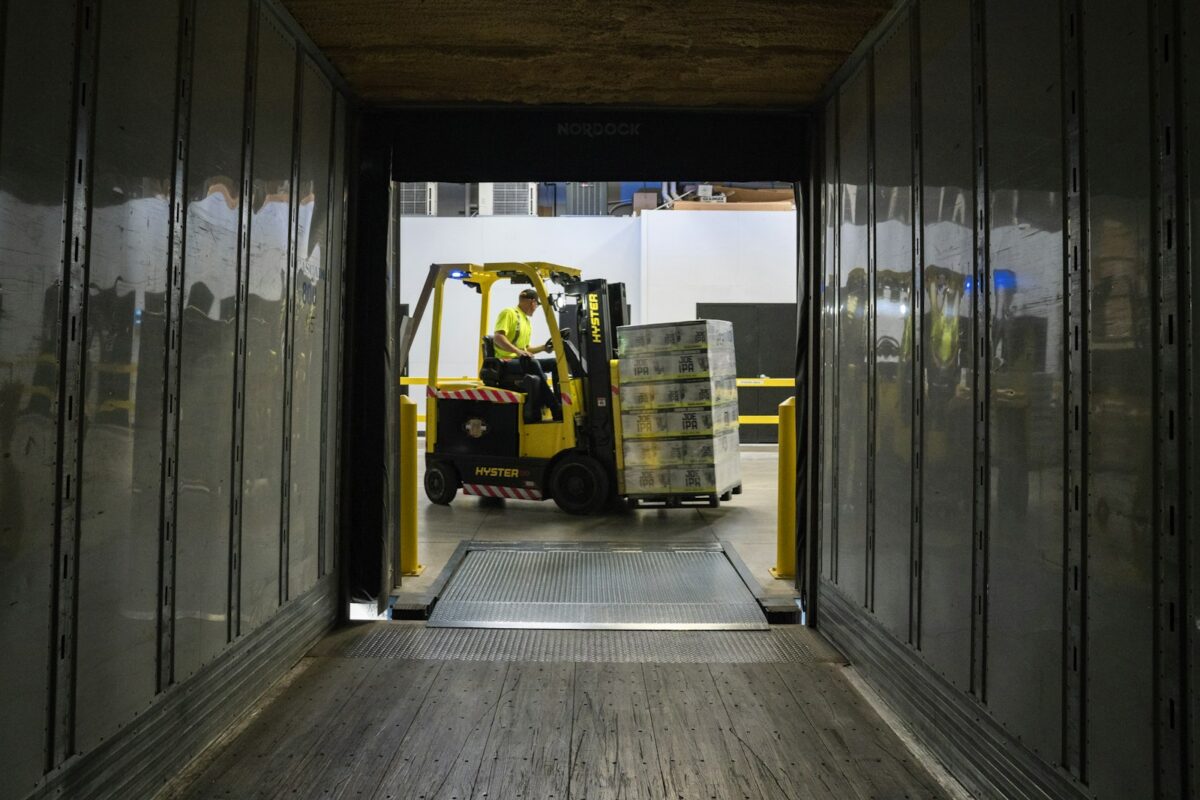
With a full container load (FCL), you pay for the whole container whether you fill it or not. With less than container load (LCL), you pay only for the space your cargo takes, sharing the box with other shippers. To decide, price both options using your cubic meters and your weight: below a certain volume LCL wins, above it FCL wins, and that point shifts with every lane and every rate.
With FCL, the container is yours for the trip. It is loaded at your supplier's or your forwarder's warehouse, sealed, and not opened again until destination unless customs inspects it.
With LCL, your cargo shares a container with other importers' goods. The consolidator receives it at a container freight station (CFS) and fills the container with several customers' cargo; at destination, another warehouse unloads it and separates each shipment.
Approximate inside dimensions of standard dry containers:
Those are geometric capacities. With pallets, mixed carton sizes and room to maneuver, the usable share usually lands between 80% and 90%. As a reference, a 20-foot holds about 10 standard 48" × 40" pallets on the floor without stacking, and a 40-foot about 20.
Weight is a limit too. The payload on a container's data plate is usually between 25,000 and 28,000 kg, but road weight limits, both in the U.S. and at destination, can allow quite a bit less. They vary by country and by truck setup, so confirm them with the trucker before loading. With very heavy cargo, such as machinery or tile, a 20-foot fills up by weight long before it fills up by volume.
Calculator
Cargo volume
Total volume of your cargo and how much of each container it would take up.
Turn on JavaScript to see the result as you type.
The real loadable capacity is lower than the nominal capacity, because packages never fill every gap.
To work it out by hand: multiply length × width × height of each piece, in meters, then multiply by the number of identical pieces. A pallet measuring 1.20 × 1.00 × 1.50 m takes up 1.8 m³; ten of them take 18 m³. Compare that total with 33 m³ or 67 m³ and allow for space lost to stowage. (If you measure in inches, multiply the three dimensions and divide by 61,024 to get cubic meters.)
FCL is priced per container. Fixed per-container charges at origin and destination are added on top, such as terminal handling charges (THC).
LCL is priced per weight or measure (W/M): you pay on whichever is greater, cubic meters or metric tons. A shipment of 4 m³ and 1,500 kg pays for 4 units; one of 2 m³ and 3,000 kg pays for 3. There are also warehouse handling charges at origin and devanning charges at destination, nearly always per cubic meter, and usually a 1 m³ minimum.
| Factor | FCL (full container) | LCL (consolidated) |
|---|---|---|
| How it's priced | Per container, full or not | Per m³ or metric ton, whichever is greater |
| Origin and destination charges | Fixed per container | Per m³, plus warehouse charges at both ends |
| Handling | Loaded and unloaded once | Goes through two warehouses and is handled several times |
| Door-to-door time | Shorter: leaves on the next sailing | Longer: waits for the consolidation to close, then for devanning at destination |
| Risk of damage or shortages | Lower | Higher, due to handling and mixing with other cargo |
| Customs inspection | Affects only your container | If customs holds the box over another shipper's cargo, yours waits too |
| Usually the better fit when | Volume is around half a container or more, or the cargo is fragile or high-value | Volume is small, or orders are frequent and low-volume |
Say a medical supplies distributor in the Dominican Republic imports a shipment from Miami to the port of Río Haina: 18 m³ weighing 5,400 kg. Since 18 m³ is more than 5.4 metric tons, LCL bills it as 18 W/M units.
Assume these rates:
LCL
LCL cost: 18 × (95 + 20 + 30) = 18 × 145 = USD 2,610, plus USD 150 = USD 2,760.
20-foot FCL
FCL cost: USD 3,150.
At 18 m³, LCL costs USD 390 less. The break-even point is the volume at which both options cost the same: take the USD 3,150 container cost, subtract the USD 150 in documents you pay either way, and divide by USD 145 per cubic meter. That gives 20.7 m³. On these assumptions, from about 21 m³ up the full container is cheaper, and there is still room to spare in a 20-foot.
Weight changes the math as well. If the same 18 m³ weighed 22,000 kg, LCL would bill 22 W/M units: 22 × 145 + 150 = USD 3,340, more than the container. At that weight you would also need to confirm the container can travel by road without splitting the load.
Before choosing LCL to save USD 390, weigh what the quote doesn't show: the extra days waiting at the origin and destination warehouses, and the fact that the medical supplies will be handled more times. Ask when the next consolidation closes and how many days to expect at each warehouse.
Yes. You pay for the whole box in exchange for less handling and less warehouse time, which often pays off with fragile or urgent cargo.
LCL bills it by weight, at 1,000 kg per unit. With FCL, container and road weight limits may force you to split the load across two containers even when the volume fits in one.
With FCL, the carrier gives a few free days to pick up the container at the port and return it empty; after that it charges demurrage and detention per day. With LCL, the destination warehouse charges storage after its free period. Free time varies by carrier and port, so ask for it in writing on the quote.
If you have the dimensions of your next order and want to know which option costs less on your lane, send them over and we'll run the numbers with current rates.
What each line on a freight quote means (THC, BAF, EEI, BL, clearance), what to check in the fine print and how to compare two quotes fairly.
How air freight chargeable weight works: actual weight, volumetric weight with the IATA 6,000 divisor, and a worked Miami to Bogotá example.

The 11 Incoterms 2020 rules explained for buyers: who pays each leg, where risk transfers and how to compare quotes made on different Incoterms.
Tell us about your shipments and our logistics experts will get in touch as soon as possible.